L’incontro intende fornire a consiglieri di amministrazione e top manager gli elementi utili per comprendere il ruolo delle analisi di scenario nella prospettiva della transizione energetica e la connessione tra di esse e una pianificazione aziendale strategica di medio e di lungo termine orientata alla decarbonizzazione, che tenga anche conto della crescente domanda di disclosure climatica che viene dagli investitori.
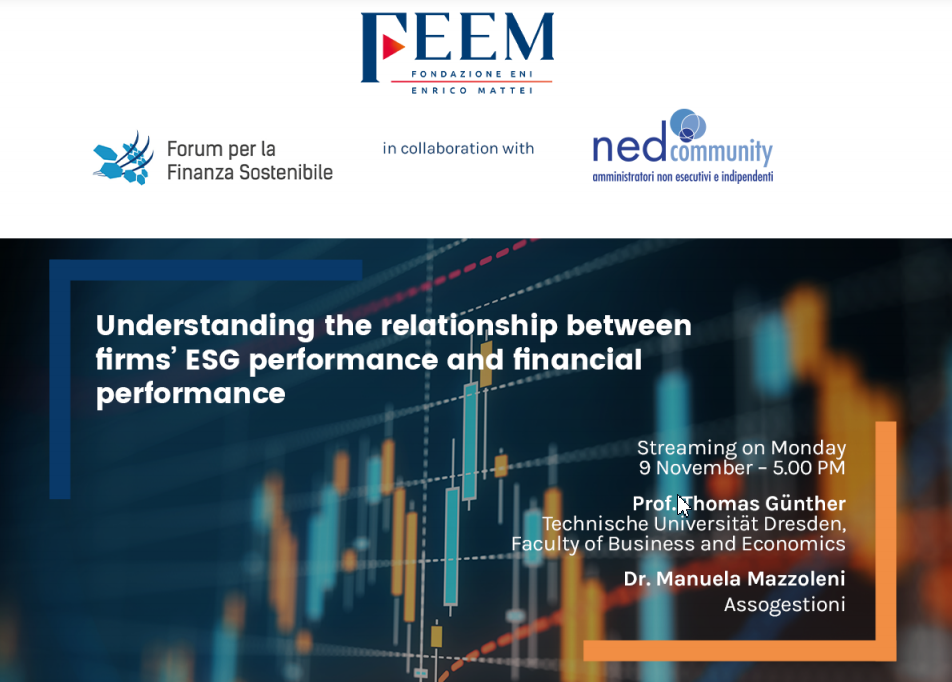
There is still no general consensus on the relationship between corporate environmental performance (CEP) and corporate financial performance (CFP), neither there is an agreement on the theoretical framework that explains the contradictory results that have emerged over time. A number of reasons may contribute to generating this kind of confusion, from the data used to the chosen modelling framework. Linear models have dominated the scientific debate, but lately non-linear models have been developed, offering a new perspective on the relationship between CEP and CFP. Trumpp and Günther find a U-shaped relationship between carbon performance and profitability as well as between waste intensity and profitability.
This webinar is aimed at shedding light on the reasons why there is such a heterogeneity regarding the research results and providing a deep commentary of the paper’s results, offering a new point of view on the issue.
Speaker: Thomas Günther, Professor, Technische Universität Dresden, Faculty of Business and Economics.
Discussant: Manuela Mazzoleni, Direttore Operations e Mercati, Assogestioni.
Presenter: Riccardo Christopher Spani, Researcher, Fondazione Eni Enrico Mattei.
This webinar is part of the FEEM/DeRisk-CO project, which aims at stimulating a debate on the importance of assessing and disclosing climate-related risks and opportunities and their impact on financial performance, with a particular focus on Italian businesses.
abbiamo il piacere di condividere con voi alcuni webinar organizzati da Chapter Zero UK, le cui date e tematiche potrete trovare nel link del flyer che trovate qui di seguito, a partire dal:
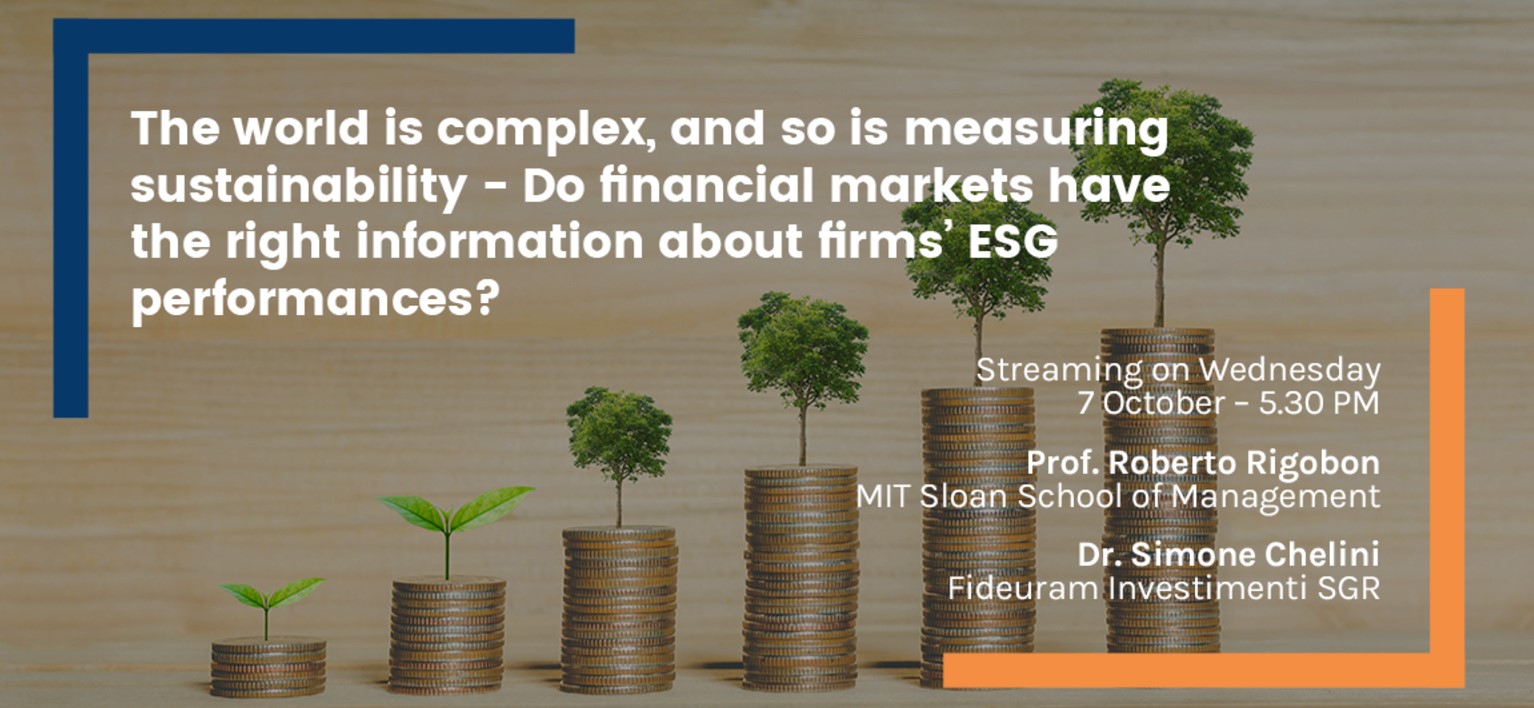
Understanding the relationship between firms’ financial performance and their environmental, social and governance (ESG) performance is a challenge that scholars have been tackling since the Seventies. However, as time passes by, the technology develops, and the data availability increases, the tools and methodologies developed to assess and measure this relationship diverged in many aspects. This heterogeneity is particularly pronounced in the ESG rati ngs, and as it appears clear, it may contribute to generate a certain degree of confusion. For this reason, some scholars have attempted to trace the disagreement between the ESG ratings of five prominent rating agencies.
This webinar is aimed at providing an in-depth commentary of the results that emerge from the paper, offering to the stakeholders useful insights when it comes to interpret data and research outcomes.
Speaker: Roberto Rigobon, Professor at MIT Sloan School of Management
Discussant: Simone Chelini, Head of ESG and Strategic Activism at Fideuram Investimenti SGR Presenter: Riccardo Christopher Spani, Researcher at Fondazione Eni Enrico Mattei
This webinar is part of the FEEM/DeRisk-CO project, which aims at stimulating a debate on the importance of assessing and disclosing climate-related risks and opportunities and their impact on financial performance, with a particular focus on Italian businesses.
L’incontro intende fornire a consiglieri di amministrazione e top manager gli elementi utili per valutare l’introduzione di metriche collegate alla decarbonizzazione e alla riduzione dell’impatto ambientale, nel quadro del crescente utilizzo di indicatori ESG all’interno della pianificazione strategica e dei sistemi di incentivazione manageriale.
Intervengono
Sabrina Bruno, Unical-Luiss G. Carli, Chair, Chapter Zero – The Nedcommunity Climate Forum
Edoardo Cesarini, Amministratore Delegato e Talent & Rewards Country Leader, Willis Towers Watson
Stefano Pareglio, Università Cattolica del Sacro Cuore, FEEM, Co-Chair, Chapter Zero – The Nedcommunity Climate Forum
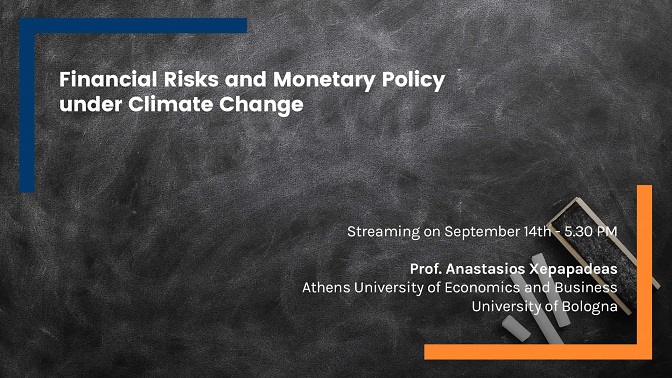
Since the horizon at which climate change impacts the economy has shortened, the very likely impact of climate change on growth and future output paths might require more involvement of monetary policy. Although monetary policy aims at short-term output and employment stabilization, it should consider the impact of climate change on output, as well as the potential impact of climate-change-related fiscal policy measures on inflation.
On September 14th, Fondazione Eni Enrico Mattei, Italian Sustainable Investment Forum (ItaSIF) and Nedcommunity will discuss the impact that climate-related issues can have at a macro level, and the possible actions that monetary policy can implement in order to manage them properly.
With the participation of the DeRisk-CO network, the event will be the occasion to discuss with two professors from the University of Athens, University of Bologna, and University of Roma Tre, two approaches to the issue, deepening the analysis by presenting other possible extensions of the economic models on which such approaches are based.
Anastasios Xepapadeas – Athens University of Economics and Business, University of Bologna
Discussant:Valeria Costantini – Roma Tre University
Chapter Zero Italy è il Chapter italiano della Climate Governance Initiative del World Economic Forum. Costituito nel 2017 da un gruppo di amministratori non esecutivi di società italiane, è parte di Nedcommunity dal 2019. Il suo obiettivo, in collaborazione con i Chapters costituiti in altri paesi, è l’approfondimento, la discussione e la condivisione delle problematiche che discendono dal governo dei rischi e delle opportunità legati al cambiamento climatico. Il nome Chapter Zero riflette l’impegno a raggiungere un’economia a zero emissioni di CO2.
Introduce e modera
Sabrina Bruno, Unical-Luiss G. Carli, Chair, Chapter Zero Italy – The Nedcommunity Climate Forum
Intervengono
Giuseppe Milici, Senior Manager, Deloitte
Maria Pierdicchi, Presidente, Nedcommunity
Alessandra Franzosi, Head of Asset Owners and ESG Investing, Borsa Italiana
Aldo Bonati, Corporate Engagement and Networks Manager, Etica Sgr
Francesco Paolo Musso, Rapporti con Investitori SRI e Climate Change, Intesa Sanpaolo
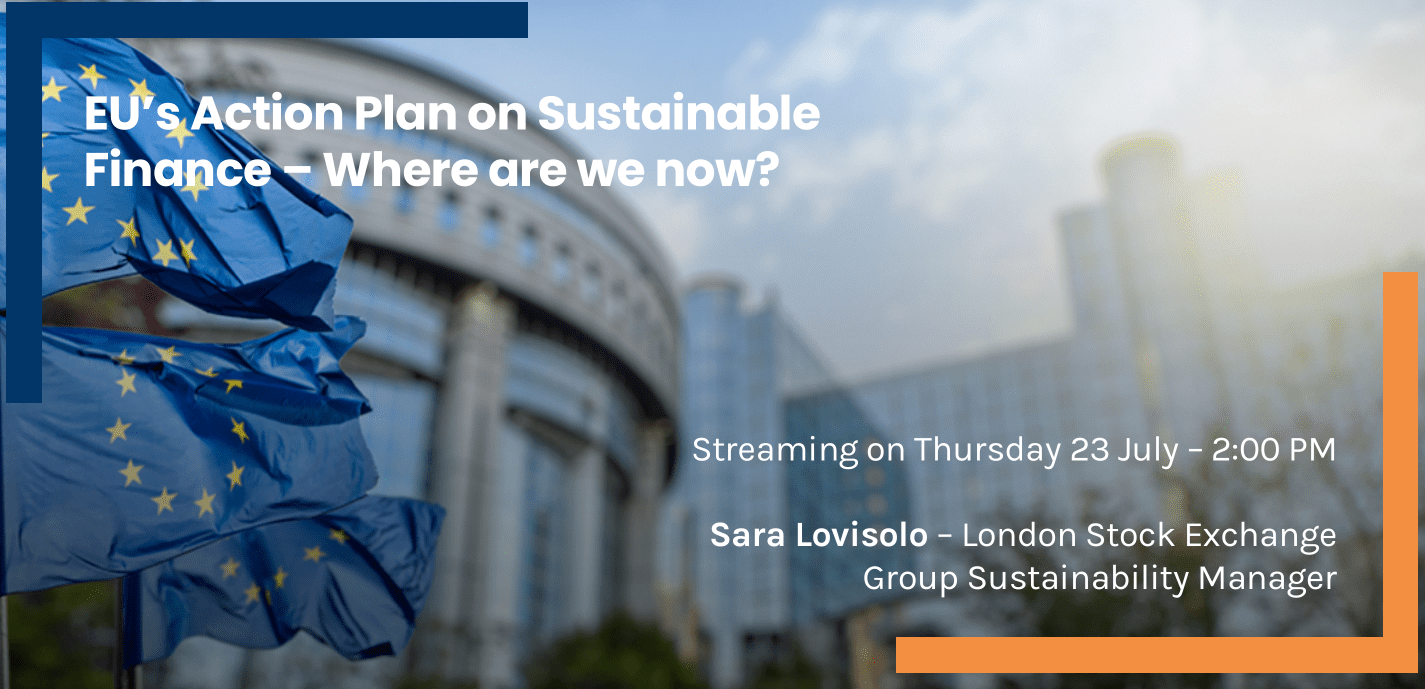
In March 2020, the Technical Expert Group (TEG) released two important documents: a Technical Report on the EU Taxonomy and a Usability Guide on EU Green Bond Standard.
These publications contain key information on the functioning of these instruments, clearing the air on many technical issues and providing evidence of the fact that implementation process of the EU Action Plan on Sustainable Finance has not been halted.
The epidemiological crisis has affected both the real economy and the financial system, but as it has been stated by the European Commission, the COVID-19 outbreak stresses the urgency of reinforcing the sustainability and resilience of our societies and the ways in which our economic systems work.
This webinar is aimed at providing a deep commentary on the state of the art and on the next steps that need to be made to further implement the Action Plan and achieve the targets that the European Commission has set within the United Nations’ 2030 Agenda and the sustainable development goals framework.
Sara Lovisolo – London Stock Exchange, Group Sustainability Manager
Presenter:Riccardo Christopher Spani, Researcher at Fondazione Eni Enrico Mattei
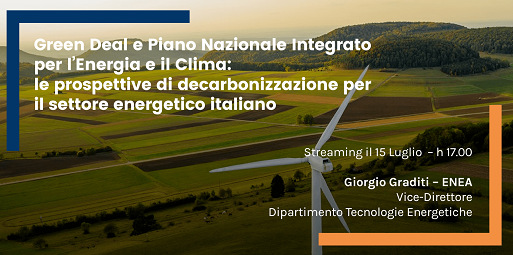
Il Piano nazionale integrato per l’Energia ed il Clima (PNIEC), in linea con lo schema stabilito dal Regolamento del Parlamento Europeo e del Consiglio 2016/0375 sulla Governance dell’Unione dell’Energia, si sviluppa definendo obiettivi, traiettorie e misure per le cinque dimensioni dell’Unione dell’Energia: decarbonizzazione; efficienza; sicurezza energetica; sviluppo del mercato interno dell’energia; ricerca, innovazione e competitività.
I provvedimenti connessi ai cinque temi sono strettamente correlati. Coerentemente con questa visione, l’Italia intende affrontare i temi relativi a Energia e Clima in modo integrato, e condivide l’approccio olistico proposto dal Regolamento Governance, che mira a una strategia organica e sinergica sulle cinque dimensioni.
Il webinar si propone dunque di offrire una panoramica aggiornata sugli orientamenti previsti e sulle possibili azioni implementative per il raggiungimento degli obiettivi energetici.
Introduce e modera:
Stefano Pareglio, Coordinatore scientifico FEEM/Firms and Cities Transition towards Sustainability, Professore all’Università Cattolica del Sacro Cuore.
Interviene:
Giorgio Graditi, Vice-Direttore Dipartimento Tecnologie Energetiche, ENEA
Cambiamento climatico e ruolo del Consiglio di Amministrazione
15 Giugno 2020,ore 11:00
Chapter Zero Italy è il Chapter italiano della Climate Governance Initiative del World Economic Forum. Costituito nel 2017 da un gruppo di amministratori non esecutivi di società italiane, è parte di Nedcommunity dal 2019. Il suo obiettivo, in collaborazione con i Chapters costituiti in altri paesi, è l’approfondimento, la discussione e la condivisione delle problematiche che discendono dal governo dei rischi e delle opportunità legati al cambiamento climatico. Il nome Chapter Zero riflette l’impegno a raggiungere un’economia a zero emissioni di CO2.
Introduce
Maria Pierdicchi, Presidente, Nedcommunity
Intervengono:
Franco Amelio, Sustainability Leader, Deloitte
Sabrina Bruno, Unical-Luiss G. Carli, Chair, Chapter Zero Italy – The Nedcommunity Climate Forum
Stefano Pareglio, Università Cattolica del Sacro Cuore, FEEM, Co-Chair, Chapter Zero Italy – The Nedcommunity Climate Forum